Natural Food Coloring - 10 Plant-Based Organic Vibrant Liquid Dyes, Artificial Dye-Free, Non-GMO Review (2026)
Updated September 21, 2026 · Research-based review
Our verdict
A good match for bakers who want to avoid artificial dyes without giving up color variety, since ten plant-based liquid shades with precision droppers cover most baking needs. Natural pigments cannot match synthetic gel intensity, so anyone chasing bold, saturated colors like black or neon should expect softer results.
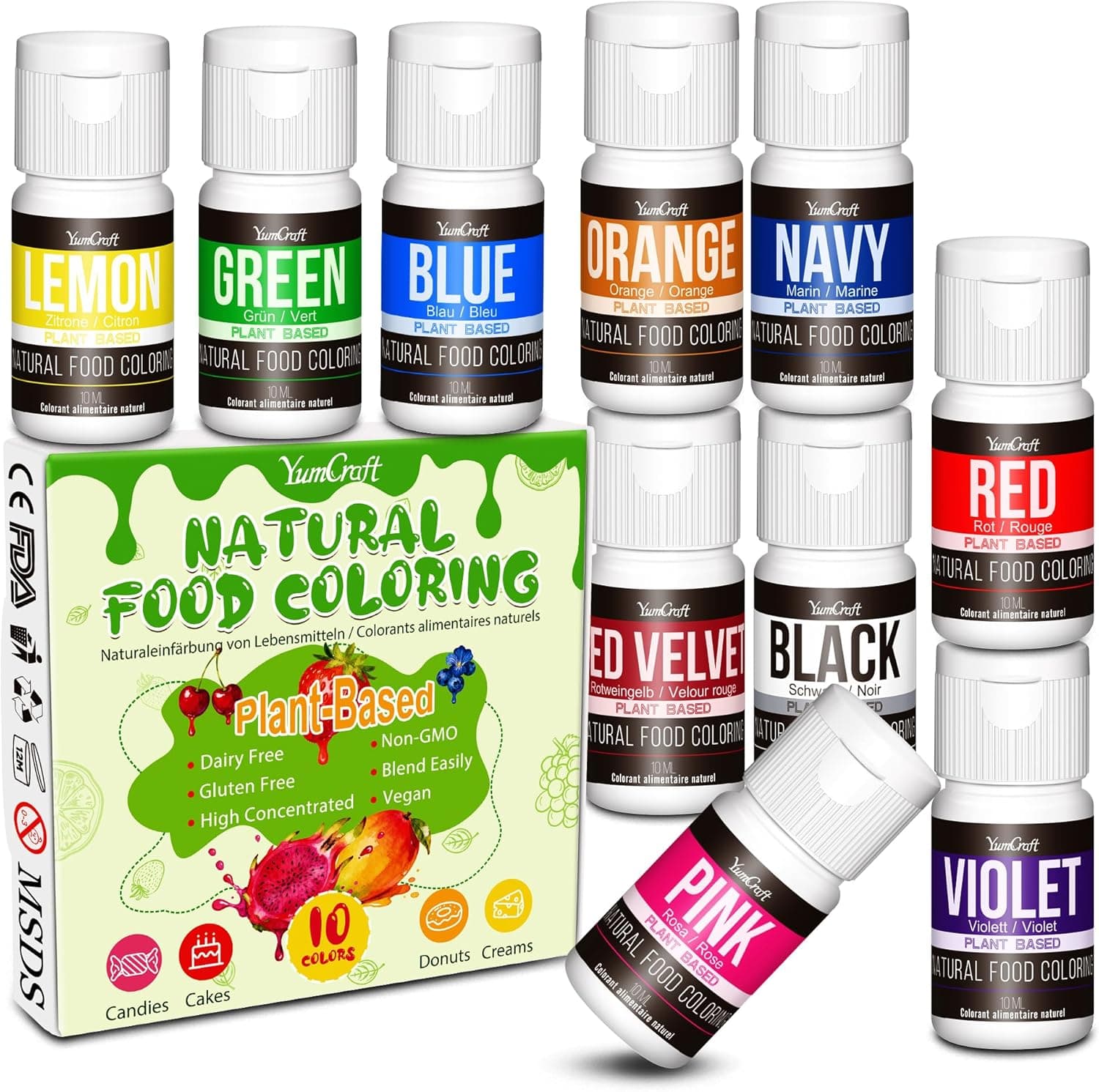
A set of 10 plant-based organic liquid food dyes, artificial dye-free and non-GMO, for natural baking colors.
Price range: See on Amazon
What we liked
- + Plant-based, non-GMO dyes suit families avoiding artificial colors
- + 10 colors give more choice than most natural dye kits
- + Liquid form mixes easily into batters and glazes
Trade-offs
- - Natural colors look softer and less bright than synthetic gels
- - Liquid dyes can thin buttercream if you add a lot
What is in the set
This is a set of 10 plant-based liquid food colors, each bottled with its own dropper for controlled, drop-by-drop application rather than pouring from a larger container. The listing markets the dyes as artificial dye-free, non-GMO, and food grade, positioning the set for families or bakers who specifically want to avoid synthetic FD&C dyes in their baking. Ten separate colors is a wider range than many natural coloring kits, which often ship with just four or five core shades, so this set gives more room to mix custom tones or match a wider variety of themes without needing a second kit. Each dropper is designed to help portion small, precise amounts, which matters more with liquid dyes than with gels since liquids can thin a mixture if added in excess.
How natural dyes compare to synthetic ones
Plant-based food colors are typically less concentrated than synthetic gel dyes, which are formulated in labs to achieve strong, saturated color from a very small amount. As a result, natural liquid dyes like these tend to produce softer, more muted tones, and reaching a deep or vivid shade, such as true red, black, or neon colors, often requires adding more dye than a synthetic equivalent would need. This is a known trade-off across the natural food coloring category rather than something specific to this brand, and it is worth setting expectations accordingly if the goal is a bold, saturated frosting color rather than a pastel or naturally toned one. For buttercream, batters, and glazes aiming for soft, believable natural tones, though, plant-based dyes generally perform well.
Using liquid dyes without thinning your mix
Because these are liquid rather than gel or powder, adding a larger volume to reach a deeper shade can gradually thin out buttercream, glaze, or batter consistency, which is the main practical downside compared with concentrated gel dyes that need only a drop or two. The included droppers help manage this by allowing very small, controlled additions rather than pouring in an estimated splash, so building color gradually in small increments and checking consistency along the way is the safer approach with any liquid dye. For thinner applications like glazes or drink mixes, this is less of a concern, since some added liquid is often expected anyway, but for stiff buttercream meant to hold piped detail, it is worth adding dye slowly.
Flavor and everyday use
The dyes are described as odorless and tasteless, which is an important quality for a food coloring product since some natural dye sources can carry a faint earthy or vegetal taste that comes through in a finished dessert if not properly processed. Being marketed for a wide range of uses, including cakes, cookies, buttercream, fondant, icing, drinks, and non-food crafts like homemade playdough or soap, suggests the formulation is meant to be versatile enough for both edible and non-edible projects around the kitchen. For anyone specifically avoiding artificial dyes for dietary, allergy, or personal preference reasons, having one set that works across several dessert types cuts down on needing separate natural coloring products for each application.
Who should choose this set
This set fits bakers and parents who want to steer away from synthetic FD&C dyes while still having a reasonably wide color range to work with, and the ten-color spread with individual droppers makes it more versatile than smaller natural dye kits. It is a less ideal choice for anyone whose recipes depend on bold, highly saturated colors, since natural pigments will generally read as softer and more muted than synthetic gels no matter how much is added. For pastel palettes, naturally toned desserts, or households avoiding artificial dyes on principle, though, this set offers solid everyday value across baking, frosting, and drinks.
Frequently asked questions
Will these natural dyes taste like anything in the finished dessert?
They are described as odorless and tasteless, so they should not noticeably change the flavor of your baking.
Can I get a deep, bold color like black or bright red with these?
Natural liquid dyes are generally less concentrated than synthetic gels, so very deep or neon shades are harder to reach and will usually look softer than synthetic equivalents.
Will adding a lot of these liquid dyes thin out my frosting?
It can, since they are liquid rather than gel, so it helps to add color gradually with the included dropper and check consistency as you go, especially in stiff buttercream.
Are these dyes only for baking?
No, the set is also marketed for drinks and non-food crafts like homemade playdough or soap, in addition to cakes, cookies, buttercream, and icing.
Prices change often, so check the current price and availability on Amazon.
Check price on AmazonCake Decor Nest may earn a commission from the link above.