12 Inch Stainless Steel Cake Scraper, Leveler and Smoother, Icing Spatula, Perfect Tool for Icing, Frosting, Cream Edge Review (2026)
Updated September 20, 2026 · Research-based review
Our verdict
A 12-inch stainless steel scraper built to level, smooth, and spread icing on tall or stacked cakes, doubling as a spatula for crumb coats. The extra height is the main selling point over shorter scrapers, though that same length makes it clumsy on small, single-layer cakes.
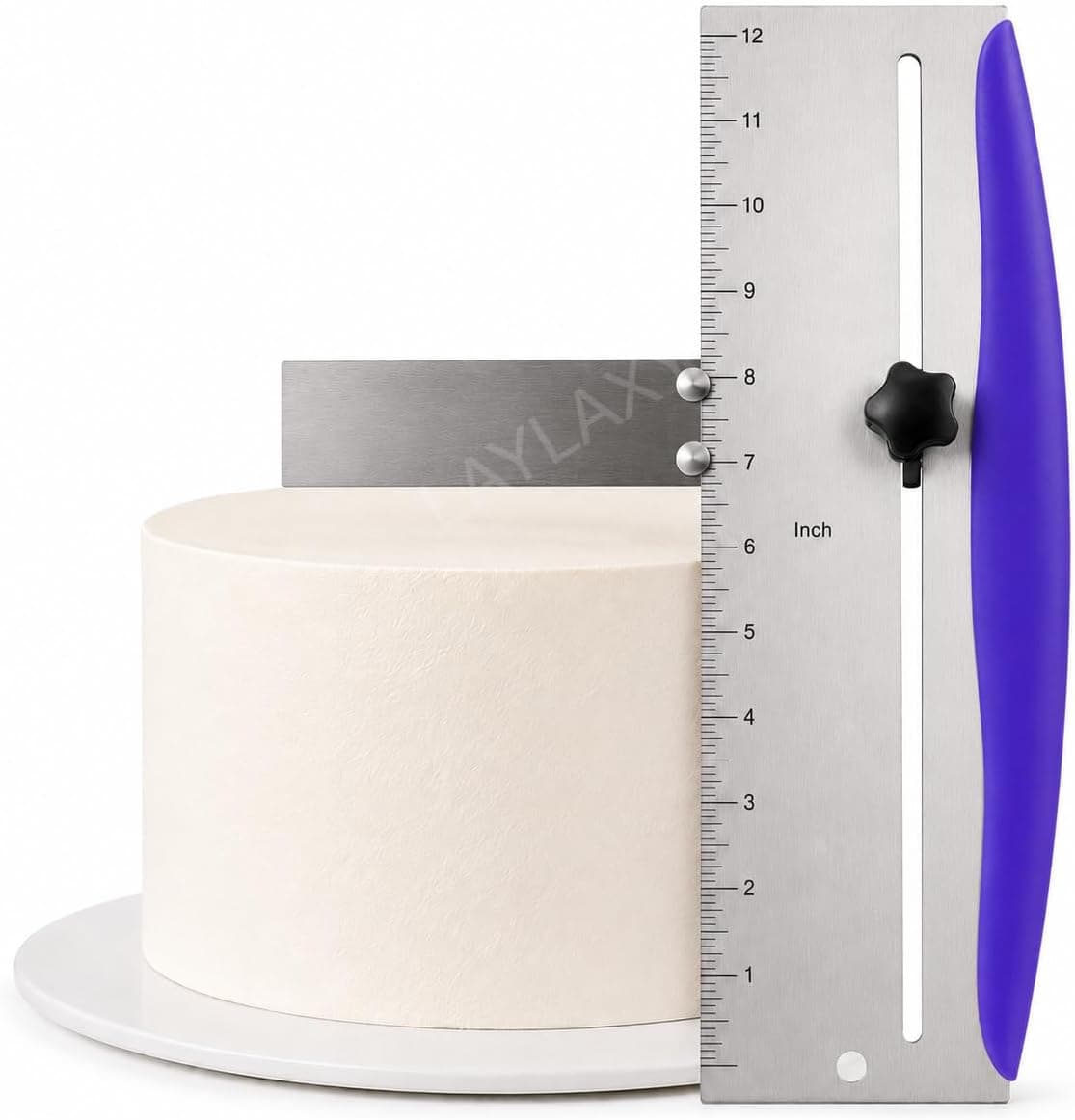
A 12 inch stainless steel cake scraper, leveler and icing spatula built for tall frosting and cream edges.
Price range: See on Amazon
What we liked
- + 12 inch height handles tall and stacked cakes that shorter blades miss
- + Rigid steel keeps sides straight for sharp buttercream edges
- + Works as a spatula for spreading crumb coat before the final scrape
Trade-offs
- - Long blade feels awkward and top-heavy on small, short cakes
- - Metal gets cold and can drag on chilled buttercream if not warmed
Built for height
This scraper is a single 12-inch stainless steel blade, longer than the 8 to 10-inch scrapers many home bakers already own. The point of that extra length is straightforward: a tall stacked cake, a multi-tier wedding cake, or a naked-style cake with several layers needs a scraper that can travel the full height of the side in one pass. Shorter scrapers force a decorator to work in sections and blend seams, which is harder to do cleanly. A single continuous pass with a 12-inch blade is more likely to leave a smooth, unbroken buttercream surface, provided the cake stand can be turned steadily while the blade stays flat against the side.
Steel rigidity versus plastic
Being stainless steel rather than plastic, the blade holds a rigid, flat edge that does not flex under the pressure needed to push excess buttercream off a cake side. That rigidity is what produces sharp, straight vertical lines and crisp top edges, the look most bakers are chasing when they reach for a metal scraper instead of a plastic one. Steel is also easy to wipe clean between passes and between different icing colors, since buttercream does not cling to a smooth metal surface the way it can to a slightly textured plastic edge. The trade-off is weight: a 12-inch steel blade is heavier in hand than an equivalent plastic scraper, which some bakers with smaller hands notice on longer decorating sessions.
Doubling as a spatula
Because the blade is also described as an icing spatula, it works for spreading a crumb coat before the final smoothing pass, not just scraping the finished layer. Using one tool for both steps means less switching between implements mid-project, and the flat, adjustable design suits mousse, cheesecake, and cream cake work as well as traditional buttercream. For bakers who build a lot of layered desserts beyond birthday cakes, that dual use adds value beyond a scraper that only shapes the final side. It is worth noting the blade is not shaped like a offset spatula, so very fine detail spreading around a cake's edges still benefits from a smaller dedicated tool.
Where the length becomes a downside
The same 12-inch length that helps on tall cakes works against the tool on short, single-layer cakes or small individual cakes, where the blade extends well past the cake's edges and feels top-heavy to maneuver. Cold buttercream can also drag under a chilled metal blade rather than gliding smoothly, so many decorators warm the blade slightly under running water or let refrigerated cakes sit a few minutes before the final scrape. Neither issue is unique to this scraper, but they matter more with a longer blade since there is more surface area for both problems to show up across a single pass.
Who should buy this scraper
This is a solid pick for anyone regularly building tall or multi-tier cakes who wants one long, rigid blade instead of piecing together shorter passes. It also suits bakers who want a single tool that handles both crumb coating and final smoothing. Home bakers who mostly make small, single-layer cakes, or who prefer a lighter plastic scraper for everyday use, will likely find a shorter blade easier to control. Comparing it against other steel scrapers in the same guide, this model sits in the middle of the pack on score, competitive but not the top-ranked option among 12-inch steel scrapers with adjustable scales.
Frequently asked questions
What size cakes is a 12-inch scraper best for?
Tall, stacked, or multi-tier cakes benefit most, since the blade can travel the full height in one pass instead of working in shorter sections.
Can this scraper spread a crumb coat too?
Yes, it is described as an icing spatula as well as a scraper, so it can spread the initial coat before the final smoothing pass.
Why does buttercream sometimes drag when using a steel scraper?
Cold metal can catch on chilled buttercream; warming the blade slightly or letting the cake sit a few minutes before scraping usually fixes it.
Is stainless steel better than plastic for sharp edges?
Steel holds a rigid, flat edge that resists flexing, which generally produces straighter, crisper lines than a plastic scraper under the same pressure.
Prices change often, so check the current price and availability on Amazon.
Check price on AmazonCake Decor Nest may earn a commission from the link above.