CALOPET Professional Cake Leveler Slicer Cutter 4-Layer Stainless, 1-9 cm Adjustable Review (2026)
Updated September 14, 2026 · Research-based review
Our verdict
CALOPET's 4-layer leveler adjusts from 1 to 9 centimeters and lets you remove blades to cut 2, 3, or 4 even layers from one setup, built from food-grade 304 stainless steel with a PP handle. The multiple blades take more effort to clean than a single-wire leveler, and the larger frame needs more storage space.
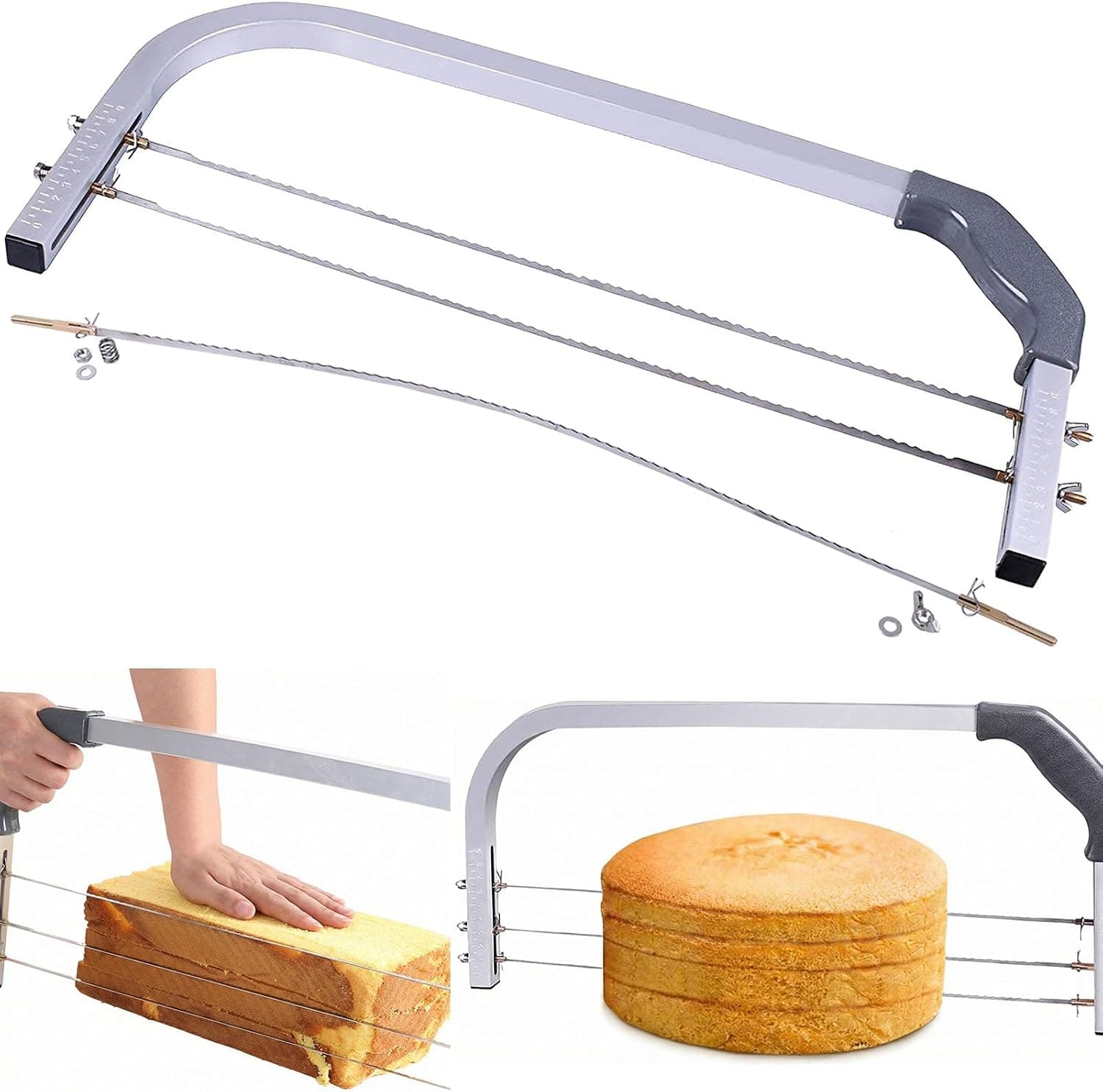
CALOPET professional 4-Layer stainless cake leveler and slicer with 1-9 cm adjustable heights.
Price range: See on Amazon
What we liked
- + 1-9 cm adjustment covers thin torte layers and thick sponges
- + Stainless build is stiffer than basic wire levelers
- + 4-Layer design lets you split a cake in one setup
Trade-offs
- - Multiple blades take more care to clean and store
- - Larger tool needs more drawer space than simple levelers
Who this leveler is for
This is a multi-blade cake leveler built around adjustable height and layer count rather than a single fixed wire. According to the manufacturer's listing, it adjusts across a 1 to 9 centimeter range and includes blades that can be removed to produce 2, 3, or 4 sandwich layers from a single cake in one pass, instead of leveling and re-cutting repeatedly with a basic wire tool. That flexibility suits home bakers and small cake businesses who regularly split cakes into multiple thin layers for filling, since it replaces several passes with a single adjustable setup. Someone who only levels a cake occasionally, or always cuts the same two-layer split, may not need this much adjustability and could manage fine with a simple fixed-wire leveler instead.
What the adjustable range and blades cover
The 1 to 9 centimeter adjustment range spans thin torte-style layers at the low end up to noticeably thick sponge layers at the high end, giving one tool coverage across most home cake recipes. The listing describes the frame as food-grade 304 stainless steel, a grade commonly used for kitchen tools because it resists corrosion and holds up to repeated washing better than lower grades. The handle uses PP, a food-safe plastic, and is described as thick with a large weight-bearing capacity, meant to stay stable while cutting through a full cake rather than flexing under pressure. Because blades can be removed, the tool scales down from a 4-layer setup to a simpler 2 or 3-layer cut depending on what a specific cake calls for.
Using and maintaining a multi-blade leveler
With several blades set at fixed intervals, the technique is largely the same as a single-wire leveler, rest the frame against the cake's sides or a turntable and draw the blades through in one motion, but the payoff is multiple even layers cut in that single pass rather than one cut followed by repositioning the tool for the next. The trade-off shows up at cleanup, a leveler with 3 or 4 blades has more surface area and more narrow gaps between blades to rinse and dry than a tool with a single wire, so it takes a bit longer to clean thoroughly and dry before storing. The stainless steel construction should resist rust through that repeated washing better than a coated or painted alternative would.
How it compares with simpler levelers
Against single or double-wire levelers like Wilton's Adjustable Cake Leveler or the PROKITCHEN wire cutter, this CALOPET tool trades simplicity for the ability to cut multiple layers at once, which matters more to bakers who routinely build 3 or 4 layer cakes than to those who stick with a basic 2 layer split. Competing adjustable blade tools such as the Agatige leveler with 3 stainless steel blades cover similar middle ground, while wire-based competitors like YAMHOHO's 9-height double wire leveler favor a thinner cutting profile over the sturdier stainless blades used here. The larger frame and multiple blades mean this tool takes up more drawer space than a slim wire leveler, a reasonable trade for bakers who use the multi-layer function often.
Bottom line
This leveler earns its place for bakers who build 3 or 4 layer cakes often enough that cutting all the layers in one setup saves real time over repeated passes with a basic wire tool. The stainless steel construction and wide 1 to 9 centimeter range give it durability and flexibility across different cake heights. Bakers who almost always split cakes into just two layers, or who want the simplest possible tool to clean and store, will likely find a basic single-wire leveler a lighter, easier-to-maintain choice than committing to this larger multi-blade setup.
Frequently asked questions
How many layers can this leveler cut?
Blades can be removed to cut 2, 3, or 4 layers from a single cake, depending on how many blades are left in the frame.
What height range does it adjust to?
The leveler adjusts from 1 to 9 centimeters, covering thin torte layers up to thicker sponge layers.
What is the leveler made of?
The cutting frame and blades are food-grade 304 stainless steel, with a PP plastic handle rated for a large weight-bearing capacity.
Is this leveler harder to clean than a basic wire leveler?
Yes, having multiple blades and narrow gaps between them means it takes more time to rinse and dry thoroughly compared with a simple single-wire leveler.
Prices change often, so check the current price and availability on Amazon.
Check price on AmazonCake Decor Nest may earn a commission from the link above.